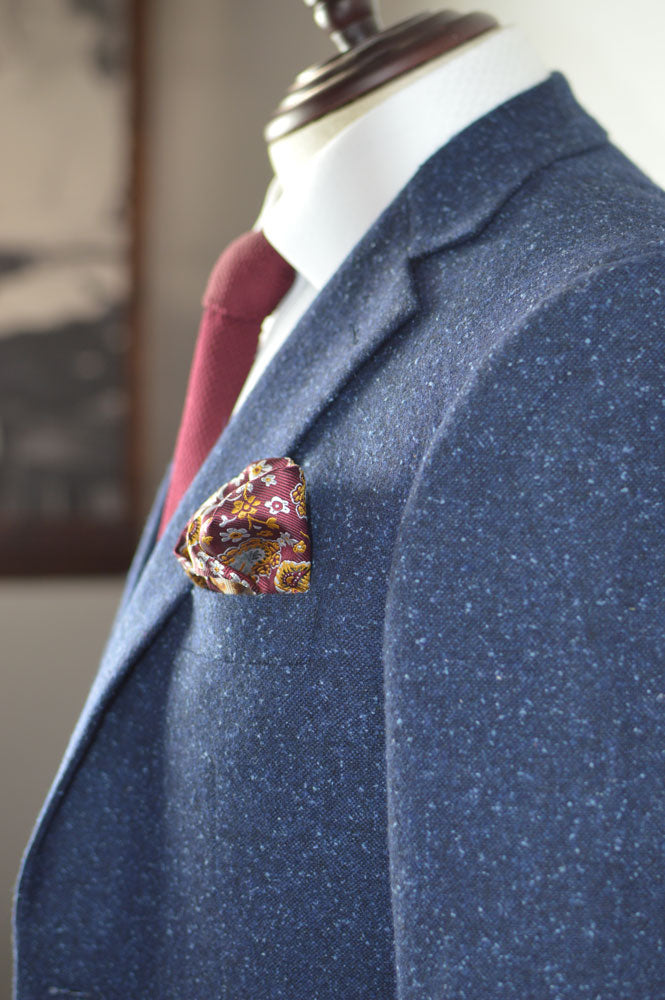


What if the most meticulously tailored suit in your wardrobe is being quietly undermined by a single, poorly managed square of silk? It's a recurring challenge we've noted across hundreds of bespoke consultations, where learning how to fold a pocket square remains the final hurdle to achieving true sartorial excellence. A bulky pocket can ruin the impeccable silhouette of a hand-finished jacket, while a fold that's too complex often looks far too studied, betraying the air of quiet confidence you intended to project.
Mastering this art isn't merely about geometry; it's an exercise in understanding the delicate balance between fabric weight, drape, and personal style. This guide provides the expertise to master four versatile folds that remain crisp from a morning board meeting to an evening gala. We'll explore the essential rules of colour and pattern coordination to ensure your accessories complement rather than compete with your bespoke attire. By the end, you'll possess the artisanal knowledge needed to elevate your sartorial presentation with a finish that feels both distinguished and entirely natural.
Key Takeaways
- Understand the distinction between a functional handkerchief and the pocket square, an essential flourish that refines a gentleman’s silhouette with quiet confidence.
- Master the precise techniques of how to fold a pocket square, ranging from the understated elegance of the Presidential Square to the sophisticated nonchalance of the Puff Fold.
- Learn to harmonise your choice of fold with the unique characteristics of your fabric, ensuring crisp geometry for linen and fluid, rhythmic drapes for exquisite silks.
- Navigate the nuances of sartorial etiquette by selecting the appropriate fold for every occasion, from minimalist precision at formal galas to expressive multi-point styles for weddings.
- Discover how the meticulous cut of a bespoke jacket’s breast pocket provides the quintessential foundation for an impeccable sartorial presence.
The Philosophy of the Pocket Square: More Than a Mere Accessory
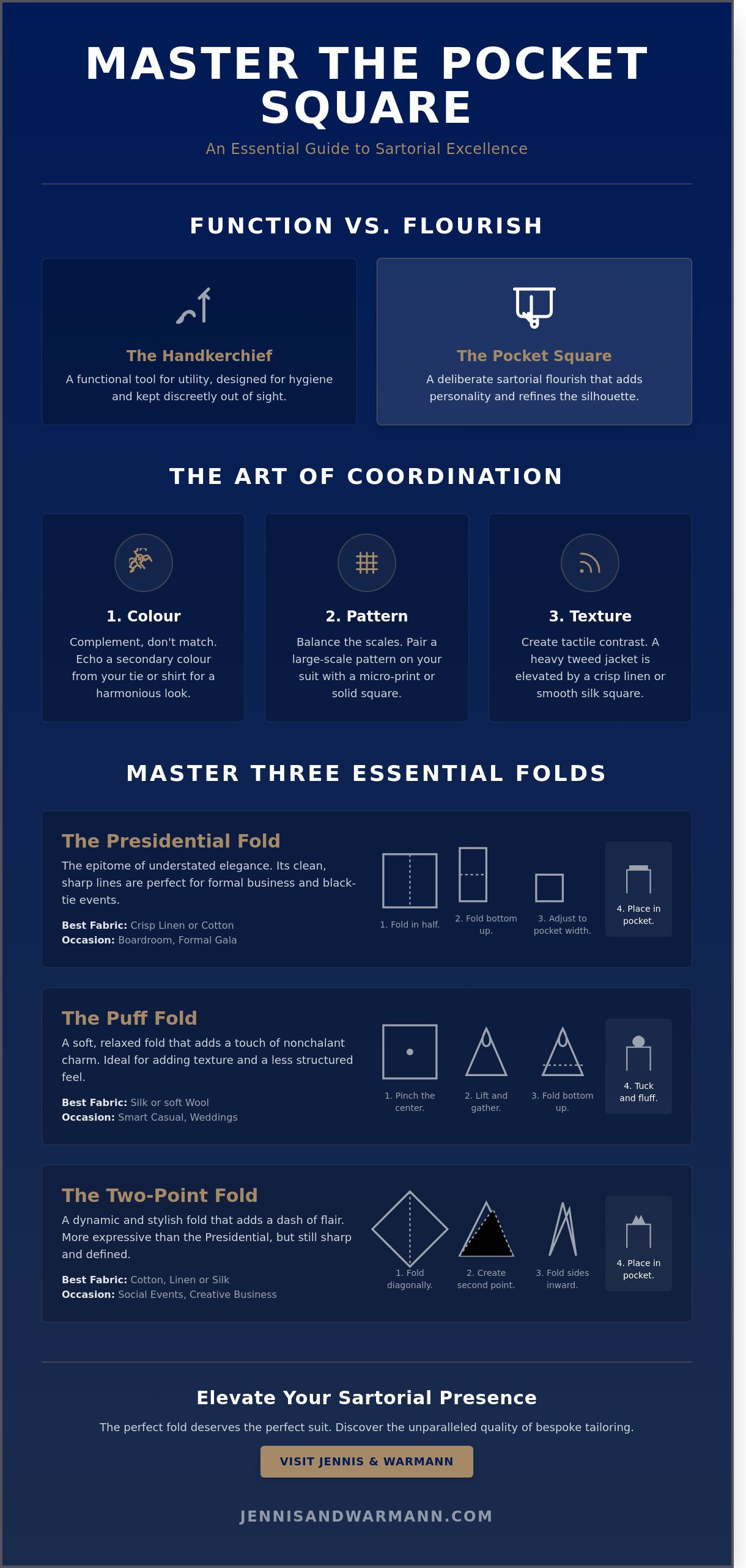
The pocket square is the soul of a well-tailored ensemble. While the suit provides the structure, the square offers the personality. It’s a common misconception to conflate this decorative silk or linen piece with the functional handkerchief. One is a tool for utility, tucked away for hygiene; the other is a deliberate sartorial flourish designed to be seen. Mastery of this small detail signals a transition from merely wearing clothes to curating an image. Learning how to fold a pocket square isn't just a technical skill; it’s an exercise in balance and proportion that defines the Modern Gentleman.
A well-placed square does more than add colour. It fundamentally alters a man’s silhouette by drawing the eye upward toward the chest and face, reinforcing the masculine V-taper of a bespoke jacket. This visual anchor provides a sense of completion that a bare breast pocket lacks. At Jennis & Warmann, we believe that a suit without a square is like a gallery wall without lighting; the quality remains, but the impact is dimmed. This meticulous attention to detail suggests a man who values precision in all aspects of his life, from his business dealings to his choice of formal suits.
The golden rule of coordination is simple: never match your tie and square perfectly. The "box set" look, where both items are cut from the same bolt of fabric, lacks the effortless elegance that defines true style. Instead, aim for harmony. A square should complement the tones of your outfit while standing as an independent element. This subtle tension between pieces creates a sophisticated narrative that suggests you've spent years refining your taste rather than minutes grabbing a pre-packaged set.
A Brief History of Sartorial Flourish
The history of the pocket square is a journey from the functional to the sublime. Originally, 14th-century nobles used scented linens to mask the less pleasant aromas of city life. By the 19th century, as two-piece suits became the standard for the British elite, the breast pocket moved from the inside to the outside of the jacket to prevent the square from being soiled by coins or keys. In 2026, the pocket square remains the quintessential finishing touch, representing a bridge between the rigid traditions of the Royal Courts and the dynamic, creative energy of modern London tailoring.
The Rule of Three: Colour, Pattern, and Texture
Achieving sartorial harmony requires a three-pronged approach. First, identify a secondary colour in your shirt or tie and find a square that echoes it. If your tie features a subtle navy stripe, a pocket square with a navy border is an impeccable choice. Second, balance your pattern scales. A bold, large-scale check suit demands a subtle, solid, or micro-print square to avoid visual clutter. Third, consider texture. A heavy wool tweed suit pairs exquisitely with a crisp, dry linen square, creating a tactile contrast that elevates the entire look. Understanding how to fold a pocket square to showcase these textures is what separates the enthusiast from the expert.
Master the Three Essential Folds: A Step-by-Step Guide
Learning how to fold a pocket square is more than a mere grooming ritual; it's an exercise in sartorial discipline. A well-placed square provides the final flourish to a hand-finished jacket, offering a glimpse into the wearer's meticulous attention to detail. Whether you're attending a high-stakes gala or a pivotal boardroom meeting, mastering these three techniques ensures your ensemble remains impeccable and your confidence stays high.
The Presidential Fold: Precision and Poise
The Presidential fold, often referred to as the Square fold, represents the pinnacle of understated elegance. To achieve this look, lay your square flat on a clean surface and fold it vertically to match the exact width of your pocket. Ensure the edges are perfectly aligned before folding the bottom up to create a clean, horizontal sliver of fabric. This sliver should sit approximately 1 centimetre above the pocket line. This style is best utilised with crisp white linen to achieve that quintessential bespoke tailoring london look. It's the choice of the discerning professional who values structure and tradition above all else.
The Art of the Puff Fold
For moments that require sophisticated nonchalance, the Puff fold is your most reliable ally. This technique is less about geometry and more about the natural, fluid drape of high-quality silk. Pinch the centre of the square and let the corners fall naturally toward the floor. While maintaining your grip on the centre, tuck the bottom corners into the pocket, allowing the rounded "puff" to emerge with effortless grace. If the result appears overly bulky or disrupts the line of your chest, gently adjust the volume by pulling the fabric deeper into the pocket. For those seeking further visual clarification on fabric tension, this illustrated guide to folding a pocket square provides excellent insights into managing different silk weights.
The Single Point: Sharp and Decisive
The Single Point fold acts as a definitive bridge between formal and business-casual attire. Start by folding the square diagonally to create a precise triangle. Fold the two base corners inward to match your pocket width, then slide the arrangement into your pocket so only the top triangle is visible. You must ensure the point is centred and upright for a sharp appearance that commands respect. This fold works beautifully with patterned silks or even light wools, providing a geometric contrast to the soft curves of a lapel.
Common Mistakes to Avoid
Achieving a professional finish requires a keen eye for balance. Avoid these frequent pitfalls to maintain your status as a modern gentleman:
- The Bulky Pocket: If your pocket is bulging, your square is likely too large for the jacket's internal construction. Consider a smaller square or a thinner fabric.
- Over-fiddling: A pocket square shouldn't look tortured or overly engineered. If it takes more than 60 seconds to arrange, it's better to shake it out and start again.
- Mismatched Weights: Using a heavy tweed square in a lightweight summer blazer can disrupt the jacket's natural balance and drape.
The right fold should always complement the architecture of your garment. If you're looking to elevate your wardrobe further, consider how a perfectly tailored formal suit serves as the ideal canvas for these essential sartorial flourishes.
Choosing the Right Fold for Your Fabric: Silk, Linen, and Tweed
The architecture of a gentleman's ensemble relies heavily on the interplay between texture and structure. When you consider how to fold a pocket square, the fabric's weight and weave serve as your primary guides. Silk, for instance, possesses a fluid drape that inherently resists rigid lines. Attempting a precise, multi-pointed fold with a delicate 15-momme silk square often results in a collapsed silhouette by midday. Instead, these lustrous fabrics excel in voluminous, organic shapes like the Puff or the Dunaway. The "memory" of the fabric, which refers to its ability to retain a shape after being manipulated, is much lower in silk than in plant-based fibres, necessitating a more relaxed approach.
For those donning men’s tweed suits, the challenge shifts toward managing physical bulk. A heavy 400gsm wool square requires a minimalist technique to prevent an unsightly protrusion at the breast pocket. A simple single-point fold or a soft square fold works best here, as the thick weave provides its own structural interest without needing complex geometry. The goal is to complement the rugged texture of the tweed rather than competing with it through over-engineered folding.
Working with Exquisite Silks
Silk is notorious for its "slippage," a trait that can frustrate the uninitiated. To secure a silk square, ensure the base of the fold is wide enough to catch against the interior lining of your jacket pocket. You should never press a silk square with an iron to sharpen its edges; doing so destroys the natural lustre and creates permanent, unsightly creases. The goal is a relaxed, effortless aesthetic. By exploring various stylish pocket square folds, you can find techniques that celebrate the high-sheen finish of silk without over-working the material. It's about achieving a look of quiet confidence rather than forced precision.
The Crisp Authority of Linen and Cotton
Linen is the architect's fabric. It's the quintessential choice for the "TV Fold" or any arrangement requiring razor-sharp precision. Because linen and cotton have high structural integrity, they respond beautifully to heat. Using a steam iron to set the edges of a Presidential fold ensures the line remains parallel to the pocket opening throughout a long day of wear. This rigidity is why linen remains the gold standard for formal business attire. Mastering how to fold a pocket square made of linen involves embracing the crease, ensuring that the fabric’s natural stiffness is harnessed into a deliberate, sharp statement of intent that stays crisp from the first morning meeting to the final evening toast.
Occasion Etiquette: Matching Your Fold to the Event
Mastering how to fold a pocket square isn't merely a technical skill; it's a lesson in social intelligence. The fold you choose serves as a silent introduction, setting the tone before you've even spoken. For Black Tie galas, the requirement is one of minimalist precision. A white silk or linen square should be executed with architectural clarity, ensuring the edge is perfectly parallel to the pocket's rim. Anything more elaborate risks appearing ostentatious in a setting that demands peak formality. It's the quiet confidence of the wearer that shines here, allowing the impeccable cut of the dinner jacket to remain the focal point.
Casual weekends invite a different philosophy. The "throw-it-in" approach, often achieved through a relaxed puff fold, suits a textured blazer or a tweed jacket. This style suggests an effortless elegance, perfect for a Saturday afternoon at a gallery or a countryside lunch. It's the sartorial equivalent of a well-timed witticism: seemingly spontaneous, yet grounded in a deep understanding of the craft. When the atmosphere is relaxed, your silk should follow suit, favouring soft edges over rigid lines.
The Groom’s Selection: Folds for the Big Day
A wedding is a rare opportunity for the modern gentleman to embrace more complex, multi-point folds. Pairing a sophisticated Two-Point fold with custom wedding suits for men creates a visual depth that photographs beautifully. While it's vital for the groom and groomsmen to maintain a cohesive aesthetic, they don't need to be identical. Varying the fold styles across the party prevents a "uniform" look, allowing each man's personality to surface within the collective elegance.
Managing a boutonniere and a pocket square simultaneously requires a delicate touch. The flower should always take precedence on the lapel, so ensure your pocket square is tucked slightly deeper than usual. This prevents the chest area from looking cluttered and maintains the sleek silhouette of a bespoke garment. Aim for a harmonious balance where the silk complements the floral tones without competing for attention.
Professional Poise in the Boardroom
In high-stakes business environments, your attire must project reliability and a meticulous nature. The Presidential fold is the safest and most effective bet for the boardroom. Its clean, horizontal line suggests a mind that values order and precision. When you're wearing formal suits for important negotiations, select subtle patterns like a fine pin-dot or a muted herringbone. These choices offer a touch of personal flair that doesn't distract from your presence or the weight of your words.
Consistency is key in a professional setting. A well-folded square should remain secure throughout a ten-hour day of meetings and travel. By choosing a structured fold, you eliminate the need for constant adjustments, allowing you to focus entirely on the task at hand. It's a small detail that reinforces your status as a man who understands the nuances of professional presentation.
Beyond the Fold: Elevating Your Sartorial Presence
Mastering how to fold a pocket square is merely the first chapter in a gentleman's journey toward sartorial refinement. While the geometry of the fold provides the structure, it's the interplay between the silk and the jacket's construction that defines true elegance. A superior breast pocket is never an afterthought; it's a deliberate architectural feature designed to cradle your accessories with precision and poise.
The drape of a jacket determines how the fabric moves with your body, directly influencing whether your pocket square remains secure or slips into the depths of the lining. Investing in quality over quantity remains the quintessential rule of the discerning wardrobe. Hand-rolled edges are a non-negotiable hallmark of excellence, as these hand-stitched borders provide the necessary weight and texture to maintain the fold's integrity throughout a long day in the City. Cheap, machine-stitched alternatives lack the organic "spring" required for a sophisticated finish.
The Bespoke Difference
A made to measure suit serves as the ultimate canvas for your personal style. During the tailoring process, we often customise the pocket depth to accommodate specific silk weights, ensuring your square never loses its shape. When you understand how to fold a pocket square correctly, the pocket's internal dimensions become a critical factor in achieving a flush finish. The relationship between your lapel width and the visibility of the pocket square is equally vital; a wider peak lapel may require a more substantial fold to ensure the accessory isn't overshadowed by the jacket's silhouette.
Caring for Your Collection
Preserving the lustre of delicate silk and wool requires a meticulous approach to maintenance. Avoid permanent creasing by storing your squares flat or loosely rolled in a dedicated cedar box, rather than leaving them tucked inside a jacket pocket overnight. Should a spill occur, never rub the fibres. Instead, seek professional dry cleaning services that specialise in luxury textiles. We invite you to refine your personal aesthetic and explore the nuances of British tailoring by booking a private consultation at our London studio.
- Ensure the pocket square complements, but never perfectly matches, your neckwear.
- Verify that the fold height sits approximately 2 to 3 centimetres above the pocket line.
- Check that the hand-rolled edges are visible if using a puff or pointed fold.
- Confirm the jacket's canvas provides enough structure to support the weight of the fabric.
- Adjust the square after sitting to ensure the drape remains crisp and intentional.
Elevate Your Wardrobe with Masterful Detail
Mastering how to fold a pocket square is far more than a mere technical exercise; it's a quintessential expression of a gentleman's personal style. You've explored the nuances of fabric selection, from the structured crispness of linen to the fluid drape of silk, and learned how to align your choice with the specific etiquette of any event. These subtle adjustments distinguish a standard suit from a truly bespoke ensemble. They reflect a meticulous attention to detail that signals quiet confidence in any setting.
At Jennis & Warmann, we bring 15 years of bespoke tailoring expertise to every piece we create, ensuring our hand-finished garments utilise the world's finest fabrics for an exquisite finish. Our artisans understand that the perfect fit extends beyond measurements to the very soul of the garment. For those seeking a truly distinguished look, we offer personal styling consultations tailored to your individual needs. Explore our collection of hand-finished accessories and bespoke suits to discover the pieces that will define your wardrobe for years to come. It's time to step out with the poise and heritage that only true craftsmanship can provide.
Frequently Asked Questions
Should my pocket square match my tie?
A pocket square should never perfectly match your tie, as this suggests a pre-packaged set rather than a considered sartorial choice. Instead, you should select a square that complements your tie by picking out a secondary colour within the pattern. This approach creates a harmonious visual dialogue between your accessories without appearing overly coordinated or unimaginative.
How do I keep my pocket square from falling into my pocket?
To prevent a pocket square from slipping, you should choose a piece with a minimum dimension of 40cm by 40cm to ensure sufficient friction against the pocket lining. If you're using a smaller or silkier fabric, placing a clean tissue at the base of the pocket provides the necessary structural support. This simple adjustment keeps your fold at the desired height throughout the day.
What size should a pocket square be for the best fold?
The quintessential pocket square measures between 40cm and 45cm on each side for the most versatile results. This specific size provides enough material to fill the chest pocket of a bespoke jacket without creating an unsightly bulge. Larger squares are particularly effective for more complex folds, while anything smaller than 30cm often lacks the volume required to stay securely in place.
Can I wear a pocket square without a tie?
Wearing a pocket square without a tie is an excellent way to elevate a casual ensemble and signal a refined attention to detail. It provides a focal point of colour and texture when the neck is left open, making it a staple choice for 85% of modern business-casual environments. This styling choice ensures you remain distinguished even in less formal settings where a full suit isn't required.
Are pocket squares still in style in 2026?
Pocket squares remain a cornerstone of the modern gentleman's wardrobe in 2026 as men move toward more personalised tailoring. Data from recent London style showcases indicates a 12% rise in the use of hand-finished accessories compared to previous years. They represent a timeless element of the art of tailoring that transcends fleeting trends, offering a permanent method for expressing individual character.
What is the easiest pocket square fold for beginners?
The Square Fold, often called the Presidential Fold, is the most straightforward method for those learning how to fold a pocket square. It involves just two horizontal folds to create a crisp, minimalist line that sits parallel to the pocket’s edge. This fold provides an impeccable finish that works beautifully for formal events or conservative business meetings where subtle elegance is preferred.
How do I clean a silk pocket square without ruining it?
Professional dry cleaning is the most reliable method for preserving the delicate fibres and hand-rolled edges of an exquisite silk square. If you must clean it at home, use cool water and a specialized silk detergent, ensuring you never wring or twist the fabric. This careful approach prevents the weave from distorting, ensuring the silk maintains its natural drape and lustre for years to come.
Can I wear a pocket square with a tweed blazer?
A pocket square is a superb accompaniment to a tweed blazer, provided you opt for textures like linen or wool-silk blends rather than high-shine silk. Choosing a matte finish complements the rugged, tactile nature of the tweed fabric. This combination adds a layer of sophisticated depth to your attire, making it ideal for the 60% of outdoor social events that call for a heritage-inspired look.