

Your wedding suit shouldn't be a mere costume for a single afternoon; it is the definitive opening chapter of your personal legacy, a garment that must command respect when you revisit your photographs two decades from now. It's a common frustration to feel lost amongst the racks of mass-produced options that prioritise convenience over character. You deserve a silhouette that celebrates your physical best rather than masking it in generic proportions.
By exploring the intricate world of custom wedding suits for men, you can transform your wedding preparations from a source of anxiety into a rewarding sartorial journey. We'll show you how to navigate the technical landscape of British tailoring, ensuring you understand exactly why a hand-finished garment is a superior long-term investment for your wardrobe. This guide details everything from the essential 12-week design timeline for the 2026 season to the nuanced differences between bespoke and made-to-measure construction, providing the expertise required to walk down the aisle with quiet, unshakable confidence.
Key Takeaways
- Understand how a bespoke garment serves as the quintessential expression of your identity, providing the quiet confidence that only an impeccable, hand-finished fit can offer.
- Learn the master tailor’s secrets to selecting the ideal cloth, ensuring your fabric choice harmonises beautifully with your chosen venue and the specific demands of the climate.
- Discover how subtle architectural details, such as lapel width and button stance, can be meticulously tailored to enhance your natural build when designing custom wedding suits for men.
- Navigate the collaborative fitting process with professional poise, ensuring your vision is translated into a garment that reflects your personal legacy and sartorial standards.
- Master the art of the long-term investment by learning to repurpose your wedding ensemble into versatile separates for future business and social occasions.
The Distinction of Custom Wedding Suits for Men: Why Bespoke Matters
The sartorial landscape of 2026 marks a definitive departure from the ephemeral trends of previous decades. Discerning grooms now prioritise "personalised heritage," a concept where a garment serves as a legacy piece rather than a single-day costume. Choosing custom wedding suits for men isn't merely a purchase; it's a profound investment in sartorial identity. Research from the 2024 Global Luxury Apparel Market report indicates that 62% of high-end consumers now value a "perfect fit" over visible brand logos. This shift reflects a deeper psychological truth. When you wear a suit crafted for your exact anatomical proportions, your posture improves and your confidence becomes palpable.
Off-the-peg garments often fail the wearer through structural flaws that compromise the silhouette. You've likely seen the unsightly shoulder divot, caused by a sleeve head that doesn't align with the natural shoulder bone, or the "pooling" effect of an incorrect trouser break. Custom tailoring eliminates these distractions. It ensures the jacket collar hugs the neck without a gap and the trousers fall in a clean, vertical line. Investing in custom wedding suits for men allows for a level of precision that mass production cannot replicate, turning a standard outfit into a masterpiece of engineering.
Bespoke vs. Made-to-Measure: Choosing Your Path
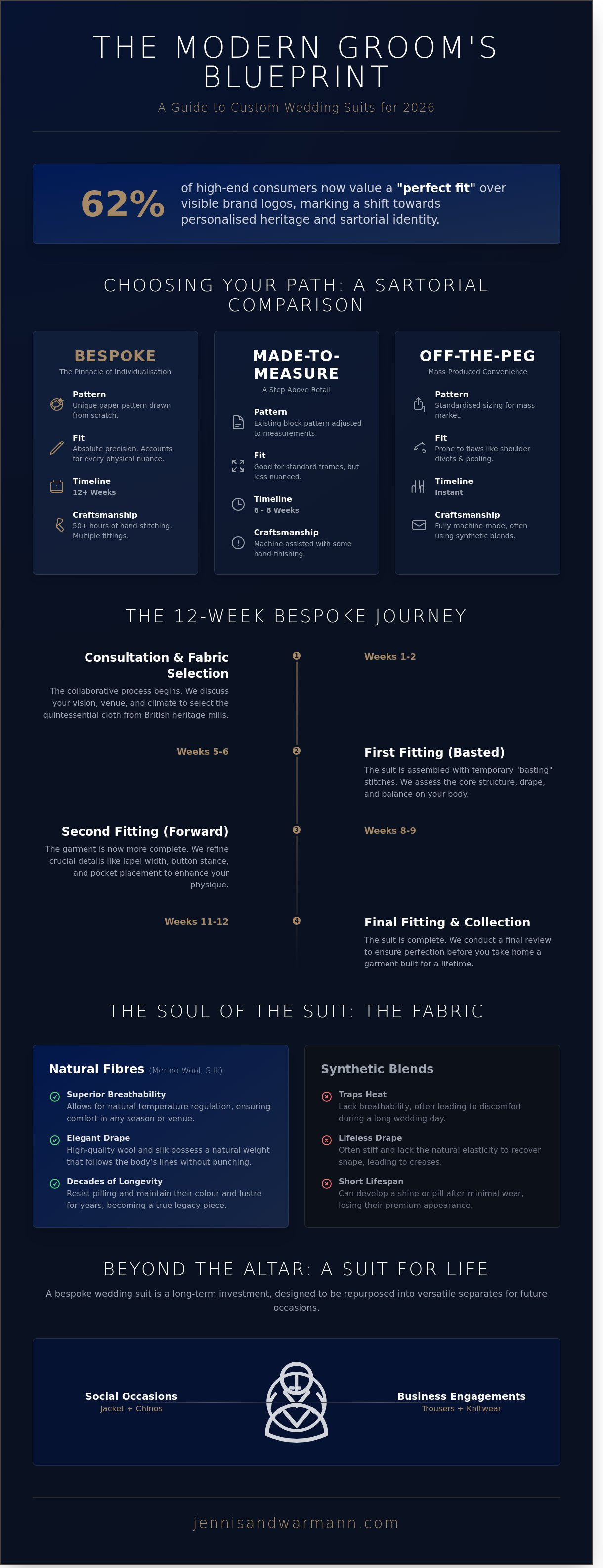
Made-to-Measure (MTM) uses a pre-existing block pattern adjusted to your measurements, typically requiring six to eight weeks for completion. It's an excellent choice for those with a standard frame who desire a higher level of finish than retail. However, What is a bespoke suit? It is a process where a unique paper pattern is hand-drawn from scratch for the individual client, accounting for every nuance of their physique. Bespoke tailoring represents the absolute pinnacle of individualised menswear, requiring over 50 hours of hand-stitching and multiple fittings. For a 2026 wedding, you should plan for a 12-week lead time to ensure every detail is refined to perfection.
The Superiority of Natural Fibres
Luxury formal suits demand the integrity of natural materials. Synthetic blends, often found in mass-market options, trap heat and lack the "memory" required to maintain a sharp silhouette over a long day. High-twist Merino wool and natural silk provide exceptional breathability and a superior hand-feel. These fibres possess a natural elasticity, allowing the garment to drape elegantly and recover its shape after the celebrations. In the Jennis & Warmann atelier, we focus on these noble materials to ensure your suit remains as impeccable at the end of the reception as it was at the start of the ceremony.
- Breathability: Natural wool allows for temperature regulation in both summer and winter ceremonies.
- Drape: The weight of high-quality wool ensures the fabric follows the body's lines without bunching.
- Longevity: Natural fibres resist pilling and maintain their lustre for decades, not just seasons.
Curating Your Cloth: Selecting the Quintessential Fabric
The selection of fabric is the most critical decision in the creation of custom wedding suits for men. It defines the garment's soul. A master tailor views the cloth through the lens of your environment, ensuring the weight and weave align with the specific demands of your wedding day. While a Super 100s wool offers a robust, dependable drape suitable for a variety of occasions, the finer Super 150s provide a silk-like lustre and an exquisite lightness. It is a delicate balance; the higher the 'Super' number, the more meticulous the care required, as the fibres are finer and more prone to creasing.
For a 2026 wedding, British heritage cloths from historic mills are seeing a significant resurgence. These fabrics are prized for their ability to hold a sharp, architectural line that modern, mass-produced alternatives simply cannot replicate. The choice of cloth dictates the suit’s behaviour. A heavier wool anchors the silhouette, providing a sense of permanence and gravity, while a lighter weave allows for fluid movement. As you consider personalising your suit details, remember that the fabric provides the canvas for every subsequent stitch and structural choice.
Tweed and Heavyweight Wool for the Winter Groom
For ceremonies held in the crisp British winter, bespoke tweed suits offer an unparalleled blend of warmth and rustic charm. Modern weaving techniques allow these traditional cloths to remain breathable while providing the necessary insulation for outdoor photography. To ensure the look remains formal, we recommend a three-piece construction in a darker, more muted palette such as charcoal or midnight navy. This elevates the fabric from its country-casual origins to a pinnacle of seasonal elegance, perfect for a manor house setting.
Linen, Silk, and Mohair: Excellence for Summer Ceremonies
Summer weddings demand a fabric that defies the heat without sacrificing structure. Mohair is often the connoisseur’s secret weapon. Its resilient fibres offer a natural crease resistance and a subtle sheen that catches the light beautifully. For those seeking a relaxed yet refined aesthetic, linen blends are essential. Adding silk or wool to the weave provides a crisp finish that resists the typical crumpling associated with pure linen in high humidity. Soft pastels and stone hues harmonise beautifully with natural light, ensuring you remain composed and cool throughout the festivities. If you are ready to begin your journey, we invite you to browse our formal suit range to discover the textures that speak to your personal style.
The Architecture of Elegance: Personalising Your Suit Details
The true distinction of custom wedding suits for men lies in the meticulous details that define the garment's soul. While the fabric provides the canvas, the architectural choices you make serve to sculpt your silhouette and enhance your natural proportions. A masterfully placed gorge line can elongate the torso, whereas the subtle roping of a shoulder can provide an air of commanding presence. These elements are the silent language of tailoring, communicating a sense of quiet confidence and personal history on your wedding day.
At the heart of any high-quality garment is its internal structure. Discerning grooms in 2026 continue to favour full-canvas construction, an artisan technique where a layer of horsehair and wool is hand-stitched between the outer fabric and the lining. This allows the jacket to drape naturally, conforming to your body over time rather than remaining stiff. A half-canvas option provides a balanced alternative, offering structural integrity at the chest while maintaining a lighter feel, which is particularly suitable for summer ceremonies in the British countryside.
Personalisation extends beyond the visible. Integrating a monogram of your wedding date or your partner's initials inside the jacket breast creates a private connection to the occasion. Some gentlemen choose to hide a small piece of heirloom fabric within the lining, a subtle nod to family heritage that remains known only to the wearer.
Lapels, Vents, and Pockets: The Fundamentals
The lapel is the most prominent feature for framing your face and chest. Peak lapels, with their upward-pointing edges, offer a regal and formal aesthetic that is quintessential for a traditional morning suit or a sophisticated evening look. Conversely, notch lapels provide a versatile, understated elegance that suits a variety of wedding themes. To ensure comfort during the ceremony and the subsequent reception, double vents are the preferred choice. They allow the jacket to sit cleanly over the hips when seated and provide a greater range of motion for the first dance. For a streamlined silhouette, jetted pockets offer the cleanest line, while flap pockets add a touch of classic British character.
Buttons, Linings, and the Art of the Waistcoat
Every element should reflect a commitment to quality. Selecting genuine horn or mother-of-pearl buttons provides a tactile and visual elevation that plastic alternatives simply cannot replicate. The interior of the jacket offers a rare opportunity for a flash of personality; a 100% silk lining in a bold pattern or a specific wedding colour adds a layer of bespoke charm. When considering a formal suit, the waistcoat remains a vital component. A single-breasted waistcoat is a timeless choice, but a double-breasted version with a shawl lapel can offer a more distinguished, vintage-inspired look that sets the groom apart from his guests.
The Tailoring Journey: Navigating the Fitting Process
The creation of custom wedding suits for men begins with a dialogue; a meticulous exchange where your aesthetic aspirations meet the artisan’s technical prowess. This initial consultation serves as the blueprint for your sartorial identity, requiring more than just a list of measurements. It's the moment to articulate your vision, whether you're seeking a sharp, contemporary silhouette or a more relaxed, heritage-inspired cut. To communicate effectively, bring visual references that resonate with your personal style, but remain open to the master tailor's advice on how specific fabrics will drape over your unique frame.
Patience is the hallmark of the discerning gentleman. You're engaging in a process of slow fashion, where the pursuit of an impeccable finish precludes the haste of mass-market retail. A pivotal milestone in this journey is the basted fitting. At this stage, the suit is temporarily held together by white basting thread, appearing as a skeletal version of the final garment. This allows the tailor to make surgical adjustments to the canvas and structure, ensuring the suit moves in harmony with your body before the final hand-stitching commences. It's a transformative phase where the flat cloth begins to take on the three-dimensional life of a masterpiece.
The Timeline: When to Start Your Sartorial Journey
A 12-week window represents the quintessential timeframe for a stress-free experience. This duration allows for the meticulous sourcing of luxury cloths and the three essential fittings required for a bespoke standard. Rushing this process risks compromising the hand-finished quality that defines a Jennis & Warmann garment. We recommend scheduling your final tweak appointment approximately 21 days before the ceremony. This buffer accommodates natural weight fluctuations, which can often vary by 2 to 4kg during the final stages of wedding planning, ensuring the fit remains sharp on the day.
What to Bring to Your Fitting
Precision relies on consistency. You must bring your chosen wedding shoes to every fitting, as a difference of even 5mm in heel height can drastically alter the trouser break. Similarly, wearing the specific shirt and cufflinks you intend to pair with the suit is vital. The shirt's collar height and the volume of the cuff dictate the exact length of the jacket sleeve, ensuring that the perfect half-inch of linen is always visible. Providing your tailor with fabric swatches from the bridal party or the wedding's colour palette ensures the final ensemble sits in quiet confidence alongside the wider aesthetic theme.
Beyond the Altar: Investing in a Suit for Life
The true value of custom wedding suits for men lies in their enduring relevance. A wedding is not a final destination for a garment; it is the beginning of a long, sartorial narrative. While a rented ensemble is returned the following morning, a bespoke commission becomes a cornerstone of a gentleman's wardrobe. The shift towards a "buy once, mend often" philosophy reflects a growing awareness in the UK of the environmental impact of disposable fashion. By choosing high-grade natural fibres, such as a Super 130s wool or a silk-linen blend, you invest in a piece that offers both physical durability and a timeless aesthetic that transcends the fleeting cycles of high-street trends.
Versatility is the hallmark of exceptional tailoring. A three-piece wedding suit provides a modular foundation for various social and professional scenarios. The waistcoat can be discarded for a streamlined business look, or worn independently with dark denim for a refined weekend aesthetic. This adaptability ensures that your investment continues to pay dividends long after the final toast has been made. A custom fit ensures the silhouette remains flattering as styles evolve, maintaining a poise that off-the-rack alternatives simply cannot replicate.
Restyling for the Office and Evening Events
Transitioning from a groom to a professional requires a subtle shift in styling. You can easily repurpose your wedding trousers by pairing them with a crisp white shirt and a contrasting blazer for a smart-casual office environment. Swapping a formal silk tie for a knitted version or a simple pocket square in a muted tone instantly dials down the formality. For those seeking everyday elegance, our insights into made to measure suits london demonstrate how precise tailoring serves the modern gentleman across all facets of life. The goal is to let the quality of the cut speak for itself, whether you are in a boardroom or at a gallery opening.
Care and Longevity: Preserving Your Investment
Protecting the structural integrity of your suit requires diligent maintenance. Use wide, contoured cedar hangers to support the shoulders and naturally repel moths. Avoid plastic garment bags, which trap moisture and can cause fibres to degrade; opt for breathable cotton covers instead. Professional dry cleaning should be a rare occurrence, perhaps once a year, as the harsh chemicals strip the natural lanolin from the wool. Instead, use a horsehair brush to remove surface dust after each wear. Crucially, allow the suit to rest for at least 48 hours between outings. This allows the natural fibres to shed wrinkles and return to their original drape, ensuring the garment remains as impeccable as the day of your wedding.
Begin Your Journey Toward Sartorial Excellence
Investing in custom wedding suits for men is a decision that extends far beyond the wedding day. It represents a commitment to personal style and the enduring quality of British craftsmanship. You've learned how selecting a quintessential fabric and understanding the architecture of a hand-finished garment ensures a fit that's both impeccable and uniquely yours. A bespoke suit isn't just clothing; it's a legacy piece designed to serve you for a lifetime.
At Jennis & Warmann, we've spent over 15 years perfecting the art of the stitch. Our dozens of 5-star reviews from satisfied grooms reflect our dedication to meticulous detail and an exquisite client experience. Whether you prefer to visit us or utilise our unique home and office fitting service available throughout the UK, we're here to guide you through every nuance of the tailoring process. Book Your Personal Tailoring Consultation with Jennis & Warmann today to start crafting your signature look. We look forward to helping you step into your future with quiet confidence and unmatched poise.
Frequently Asked Questions
How much should I expect to pay for a high-quality custom wedding suit?
A high-quality bespoke wedding suit in the United Kingdom typically ranges from £1,200 to £3,500 depending on the weight and heritage of the chosen cloth. While entry-level made-to-measure options exist at lower price points, a garment featuring full-canvas construction and hand-finished details represents a lasting investment in your wardrobe. It's a choice that prioritises artisanal excellence over mass-produced convenience.
What is the difference between a tuxedo and a custom wedding suit?
The primary distinction lies in the presence of satin or silk facings on the lapels, buttons, and trouser pockets, which are exclusive to the tuxedo. A custom wedding suit is generally crafted from a uniform wool, silk, or mohair blend without these formal silk accents. This subtle difference makes the suit a more versatile choice for various social settings beyond the evening reception.
How far in advance should I book my first tailoring appointment?
You should ideally schedule your initial consultation 12 to 16 weeks before your wedding date to ensure a relaxed and refined experience. This lead time allows our master tailors to source exquisite fabrics from world-renowned mills and conduct the necessary three stages of fittings. It's a measured process that ensures every stitch is perfect and every adjustment is executed with absolute precision.
Can I customise the lining of my suit to match the wedding theme?
You can select from an expansive library of hundreds of silk and viscose linings to harmonise perfectly with your wedding's colour palette. Many grooms choose a bold, contrasting hue or even a bespoke printed lining that features their wedding date or family crest. It's an exquisite way to add a hidden layer of personality to your ensemble that remains personal to you.
What is the most versatile colour for a custom wedding suit?
Mid-grey and navy blue remain the most versatile choices for custom wedding suits for men because they transition seamlessly from the ceremony to the boardroom. According to the 2023 National Wedding Survey, 64% of grooms opted for these timeless shades due to their enduring style and utility. Selecting these tones ensures your garment remains a cornerstone of your wardrobe for many years after you say your vows.
How many fittings are typically required for a bespoke wedding suit?
A bespoke commission usually requires three distinct fittings to achieve an impeccable silhouette that mirrors your physical form. The journey begins with the initial measurement session, followed by the "baste" fitting where the garment is temporarily stitched together, and concludes with the final technical adjustments. This iterative process is essential to ensure the drape of the jacket and the break of the trousers are quintessential.
Should I choose a two-piece or a three-piece suit for my wedding?
A three-piece suit is often the preferred choice for the modern gentleman as it provides an added layer of formality and structural elegance. The waistcoat ensures you remain looking distinguished even if you choose to remove your jacket during the evening celebrations. It's a sophisticated addition that distinguishes the groom from the guests while offering a more sculpted, traditional aesthetic.
Is a custom suit better than an off-the-rack suit with alterations?
A custom suit is superior because it's built from a unique paper pattern drafted specifically for your anatomical nuances rather than being adjusted from a generic block. While alterations can fix basic sleeve lengths, they cannot replicate the sophisticated balance and internal canvas construction found in custom wedding suits for men. It's the difference between a garment that simply fits and one that truly empowers the wearer.