

Could the most expensive bespoke garment in your collection actually be a less versatile choice for your daily life than a masterfully constructed half canvas suit? Many gentlemen find themselves trapped between the rigid, glued stiffness of high-street fashion and the delicate, high-maintenance demands of full-canvas construction. It's a common frustration to see a £500 suit lose its shape after a single damp London morning, or to feel restricted by a chest piece that refuses to breathe. You deserve a garment that moves with you, maintaining its impeccable silhouette while offering the comfort required for a sixteen-hour day.
We believe that true luxury lies in the intelligent blend of heritage and practicality. This guide reveals why the half-canvas construction is the quintessential choice for the modern gentleman, offering the exquisite drape of high-end tailoring without the prohibitive maintenance. We'll deconstruct the anatomy of this sartorial staple, from the floating horsehair chest piece to the natural lapel roll, ensuring you never overpay for inferior quality again. By the end of this journey, you'll possess the confidence to identify a garment that offers both longevity and the perfect fit, honouring the meticulous labour of the artisan.
Key Takeaways
- Understand the hidden architecture of fine tailoring and how a natural fabric interlining provides the essential three-dimensional shape required for a sharp, masculine silhouette.
- Discover why the half canvas suit represents the quintessential investment for the modern gentleman, offering a superior drape and longevity that far surpasses entry-level fused alternatives.
- Learn how the meticulous blend of horsehair and wool allows your jacket to develop a 'memory', gradually moulding to your unique physique for an impeccable, personalised fit.
- Explore the thermoregulation benefits of floating construction, ensuring your attire remains breathable and comfortable throughout the demands of a professional day.
- Master the 'pinch test' to confidently identify high-quality tailoring and ensure your next sartorial acquisition meets the exacting standards of traditional British craftsmanship.
What is a Half Canvas Suit? The Internal Architecture of Fine Tailoring
A half canvas suit represents the intelligent middle ground of sartorial engineering, providing a level of structural integrity that separates artisanal garments from disposable fashion. At its core, this construction features a natural interlining, typically a meticulously woven blend of horsehair and wool, stitched from the shoulder down to the mid-chest. This canvas acts as the jacket's hidden skeleton. It creates a three-dimensional memory that allows the fabric to contour to the unique proportions of a gentleman’s physique over time.
Unlike the rigid, fused constructions found in mass-produced high-street suits, which rely on chemical adhesives to bond the outer fabric to a synthetic backing, the half canvas approach allows the material to breathe. Fused jackets often feel stiff and lifeless, frequently suffering from "bubbling" after several visits to the dry cleaners. By contrast, the half canvas method ensures the jacket remains supple. It's the Master Tailor’s preferred choice for the modern professional who demands a garment capable of enduring the rigours of daily wear while maintaining an air of distinguished authority.
The Role of Canvas Interlining in Modern Style
The presence of a canvas interlining dictates how a jacket interacts with gravity. It allows the cloth to drape elegantly across the chest rather than simply hanging from the shoulders like a heavy curtain. This distinction is rooted in a historical evolution that saw the industry move away from the restrictive, 4kg padded frock coats of the Victorian era. Today’s gentlemen prefer the agile, lighter feel of a half canvas suit, which offers a 30% reduction in weight compared to traditional full-canvas military styles of the early 20th century. This construction is central to the philosophy explored in Bespoke Tailoring London: The Modern Gentleman’s Guide to Sartorial Excellence, where the focus remains on achieving a silhouette that is both sharp and effortless.
Why the 'Half' Approach is the Modern Standard
The term 'half' refers specifically to the coverage area of the interlining, not a compromise in material quality. By placing the canvas strategically through the shoulder and chest, tailors provide essential structure where the eye naturally rests. This leaves the waist and hips lighter and more flexible. It's an ideal configuration for the modern gentleman who requires versatility. Whether you're attending a board meeting or a formal evening event, this construction provides the necessary formality without the restrictive bulk of a full-canvas layer. It strikes a quintessential balance between heritage craftsmanship and the dynamic needs of contemporary life, ensuring the wearer feels as comfortable during a ten-hour flight as they do during a keynote presentation.
The Anatomy of Construction: Floating Canvas vs. Fused Padding
To appreciate the nuance of a half canvas suit, one must look beneath the surface cloth. It's here that the master tailor's skill is most evident. A traditional canvas acts as the skeleton of the garment; it provides structure while maintaining a soft, natural drape. Unlike mass-produced alternatives that rely on chemical adhesives, this method respects the integrity of the cloth and the comfort of the wearer.
The Science of the Floating Mechanism
In a high-quality jacket, the canvas is "floating." This means the internal layer is basted, or loosely sewn, to the outer fabric rather than being fused with heat and glue. This architectural choice allows the wool to move independently. When you reach for a glass or sit at a desk, the fabric expands and contracts without resistance. These stitches are often spaced at intervals of 10 to 15 millimetres, creating a flexible bond that adapts to your posture.
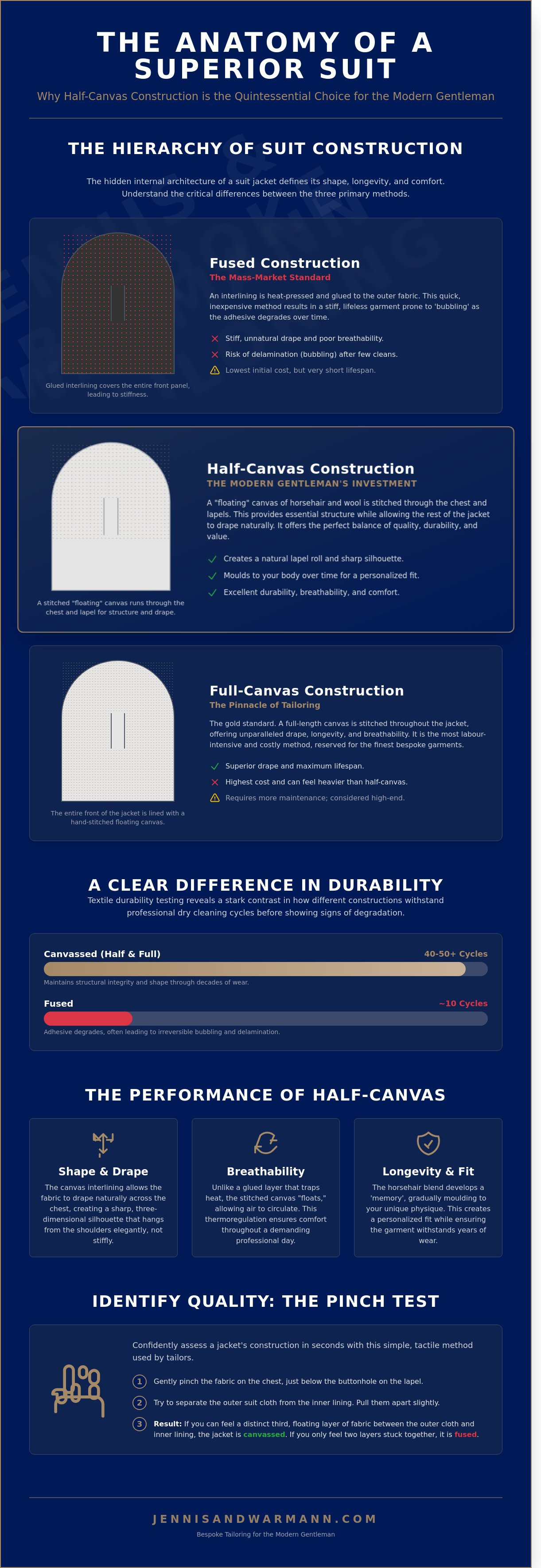
This independence also prevents the dreaded "bubbling" effect. In textile durability testing, canvassed jackets typically maintain their structural integrity through 40 or 50 professional dry cleaning cycles. Fused jackets often show delamination, where the glue degrades and creates unsightly ripples, after as few as 10 sessions. By opting for a floating construction, you're investing in a garment designed to last decades rather than seasons.
Materials of Distinction: Horsehair and Wool
The composition of the canvas is just as vital as its attachment. We utilise a quintessential British blend of horsehair and wool. These natural fibres are chosen for their resilience and breathability. The wool component adds a layer of softness, while the horsehair provides the necessary "spring" to keep the jacket's shape. Horsehair possesses a unique memory; it allows the lapel to maintain a soft, rolling curve rather than a sharp, artificial crease.
Natural fibres react to your body heat. They gradually mould to your specific proportions over the first 20 or 30 hours of wear, creating a personalised fit that improves with age. Cheap resins used in fused jackets are rigid and don't breathe, which often leads to discomfort in warmer climates. For those seeking the pinnacle of this craft, exploring our collection of formal suits reveals how these premium materials translate into a superior, breathable silhouette.
The structural integrity is secured through meticulous pad stitching. This technique involves hundreds of tiny stitches that anchor the canvas while allowing it to shift. It's the difference between a garment that wears you and one that moves with you. A hand-padded lapel features a gentle roll that a machine-pressed fused jacket can never replicate. By avoiding the heavy glues found in inferior tailoring, the half canvas suit remains lightweight and breathable, ensuring the chest piece provides a masculine, structured profile without the stiffness of a cardboard-fronted alternative.
Evaluating the Hierarchy: Fused, Half-Canvas, and Full-Canvas
The internal architecture of a jacket determines its longevity, its breathability, and how it will ultimately behave on the wearer's body. In the hierarchy of tailoring, we distinguish between three primary methods: fused, half-canvas, and full-canvas construction. While mass-market retailers often prioritise speed and cost, a discerning eye looks for the structural integrity that only a half canvas suit or its full-canvas counterpart can provide. Choosing the right construction isn't merely a matter of budget; it's about matching the garment's weight and drape to your lifestyle and the specific demands of the British climate.
- Fused: Entry-level, price-driven, and often lacks a natural silhouette.
- Half-Canvas: The versatile gold standard, offering a soft chest drape and exceptional durability.
- Full-Canvas: The traditionalist's choice, providing maximum structure with a heavier feel.
The Perils of Fused (Glued) Construction
Fused jackets are the hallmark of fast fashion. Instead of a floating layer of horsehair, these garments rely on a synthetic interlining attached to the outer wool using heat-activated glue. This chemical bond is brittle. Over time, or after exposure to the chemicals used in dry cleaning, the glue inevitably fails. This results in "bubbling," where the fabric separates from the lining, effectively ruining the suit's appearance. A fused jacket typically lasts only a fraction of the time of a canvassed one. In fact, a well-maintained half canvas suit often survives three times longer than fused alternatives, making it a far more sustainable and economical investment in the long run. Additionally, the layer of glue acts as a barrier to airflow, making these suits uncomfortably warm in heated office environments or during a busy London commute.
Half-Canvas vs. Full-Canvas: Balancing Weight and Structure
Full canvas construction involves a horsehair interlining that runs from the shoulder all the way to the hem. It provides an impeccable, rigid structure that many associate with traditional Savile Row tailoring. However, this extra material adds weight and can feel somewhat "armoured" for the modern gentleman who values mobility. The half-canvas approach is often the more contemporary preference. By extending the canvas through the shoulder and lapel but leaving the lower half of the jacket free, it creates a clean, masculine silhouette without the bulk. It offers a superior price-to-value ratio, making it the perfect entry point for those exploring Made to Measure Suits London: The Modern Gentleman’s Guide to Exceptional Tailoring. This construction allows the jacket to feel light and responsive, adapting to your movements throughout the day.
It's a common misconception that "more canvas" automatically signifies a better suit for every occasion. In 2026, the trend has shifted toward "soft tailoring"—garments that look sharp but feel effortless. Because a half-canvas jacket uses less internal material in the skirt, it drapes more naturally over the hips and breathes more effectively. For the gentleman navigating the transition from a morning meeting to an evening gallery opening, the versatility of the half-canvas construction is simply unmatched. It provides the necessary structure to command a room while maintaining the comfort required for a long day in the city.
The Performance Benefits: Drape, Breathability, and Longevity
Choosing a half canvas suit is an investment in a garment that breathes with you. Unlike mass-produced jackets that use synthetic glues to bond the outer fabric to a stiff lining, this construction employs a natural interlining of horsehair and wool. This layer creates a microscopic air gap that facilitates superior thermoregulation. Data from textile performance reviews indicates that natural canvassing allows for up to 30% better moisture wicking compared to fully fused alternatives. It keeps you cool during a summer wedding in the Cotswolds and retains essential warmth during a crisp London autumn.
The Hallmark of Quality: The Lapel Roll
The most visible sign of a well-made jacket is the lapel roll. A fused jacket usually looks flat and lifeless, featuring a sharp, ironed crease that lacks character. Because the canvas provides internal tension, the lapel of a canvassed jacket blossoms from the chest in a graceful, three-dimensional curve. This structural elegance is essential for formal suits, where a soft, rolling lapel creates a silhouette of power and poise. It's a subtle marker of quality that discerning observers recognise instantly at galas or board meetings.
Sartorial Memory: How Canvas Adapts to Your Form
Canvas is a living component. Over the first dozen wears, the horsehair fibres respond to your body heat and movement, gradually moulding to your specific posture. This 'sartorial memory' ensures the fit of your half canvas suit becomes more personal over time. The floating canvas also serves as a protective buffer. It absorbs the stress of your daily movements, preventing the outer wool from stretching or losing its shape. While a fused jacket might suffer from delamination, which is the unsightly bubbling of glue, a canvassed garment remains resilient. It bounces back after being packed in a suitcase for a business trip, requiring only a light hang to restore its drape. The longevity of this construction means the cost-per-wear over five years is significantly lower than that of a disposable, glued garment. It's a sustainable choice for the modern gentleman who values enduring style.
Identifying Quality: The Pinch Test and Investment Advice
Distinguishing a high-quality half canvas suit from a mass-produced, fused alternative requires a tactile approach that goes beyond mere visual inspection. While the outward appearance of a garment can be deceptive, the internal architecture reveals the true level of craftsmanship. For the modern gentleman, understanding these nuances is essential for building a wardrobe that stands the test of time and maintains its elegant silhouette through years of wear.
How to Perform the Pinch Test Like a Tailor
The pinch test is the definitive method used by sartorial experts to verify the construction of a jacket. To perform this correctly, follow these precise steps:
- Locate the area on the jacket front just below the bottom buttonhole.
- Gently pinch the outer fabric and the inner lining between your thumb and forefinger, pulling them slightly apart.
- Feel for a third, independent layer of material floating freely between the two. This middle layer is the canvas.
- If you feel only two layers that seem bonded together, the jacket is likely fused. The presence of that distinct third layer confirms a canvassed construction.
It's also beneficial to test the chest area. A premium garment features a robust horsehair interlining that provides a resilient, springy feel. When you press the chest, it should feel substantial and recover its shape immediately. This internal structure is what allows the lapel to roll naturally rather than looking flat and lifeless. It's a tactile secret that separates artisanal tailoring from the rigidity of fast fashion.
Choosing the Right Cloth for Your Canvas
The relationship between the internal canvas and the external cloth is a delicate balance. Textured, heavier materials such as men's tweed suits particularly benefit from the internal support of a half canvas suit build. The natural weight and character of tweed require a stable foundation to prevent the fabric from sagging over time. Without this support, the heavy wool can lose its shape, especially across the shoulders and chest.
At Jennis & Warmann, we remain committed to traditional British tailoring standards, ensuring every garment receives meticulous hand-finishing. However, even the most exquisite construction cannot compensate for an ill-fitting cut. A suit must harmonise with the wearer's proportions to truly excel. The internal canvas allows the suit to mould to your body over time, but the initial fit provides the essential blueprint for this transformation.
We invite you to experience the Jennis & Warmann difference. Our master tailors are ready to guide you through the selection of premium British cloths and the nuances of bespoke construction. Book a personalised consultation today to feel the quality of our craftsmanship firsthand and secure a garment that reflects your personal success and distinguished style.
Elevate Your Wardrobe with Timeless Precision
Investing in superior tailoring represents a commitment to both form and function; it bridges the gap between historical craftsmanship and contemporary versatility. By prioritising a floating horsehair chest piece, you ensure a garment that breathes naturally and develops a bespoke silhouette unique to your frame. This construction provides the structural resilience required for daily wear while maintaining an elegant drape that remains crisp for years.
At Jennis & Warmann, we've spent over 15 years refining the art of the perfect fit through meticulous hand-finished construction. Our artisans understand that your time is a luxury. That's why we offer a convenient national home and office fitting service across the United Kingdom. We don't just create garments; we curate a sartorial identity that reflects your personal success and quiet confidence. You deserve a suit that works as hard as you do without compromising on the exquisite details of traditional British tailoring. Take the next step in your style journey and design your perfect half canvas suit with Jennis & Warmann today. It's time to experience the transformative power of a garment made specifically for you.
Frequently Asked Questions
Is a half canvas suit worth the extra cost?
A half canvas suit represents a superior investment because it offers a natural drape that fused alternatives simply cannot replicate. While the initial outlay may be £200 higher than a mass-produced garment, the structural integrity ensures it retains its shape for over a decade. This longevity makes the cost per wear significantly lower than a cheaper suit that requires replacement after 24 months of regular use.
How can I tell if a suit is half canvas or fused?
Perform the pinch test by grasping the fabric between the buttonholes and the chest area. If you feel three distinct layers of cloth, you're holding a canvassed garment. Fused suits feel thicker and more rigid because the interlining is glued directly to the wool. You'll also notice the difference in the lapel; a canvassed suit has a soft, architectural roll rather than a flat, pressed crease.
Does a half canvas suit last longer than a regular suit?
A half canvas suit typically lasts three times longer than a fused garment because it doesn't rely on synthetic adhesives that eventually fail. Glue becomes brittle over time, leading to unsightly bubbling that ruins the jacket's appearance. By contrast, the floating horsehair canvas allows the wool to breathe and move. A well-maintained piece can easily provide 15 years of service, whereas fused jackets often degrade after 5 dry cleaning cycles.
Can a half canvas suit be dry cleaned?
You can dry clean your suit, but you should limit this to once or twice a year to protect the natural fibres. Chemical solvents are aggressive and can strip the lanolin from the wool, making the fabric dull and brittle over time. Most refreshes only require a gentle steam and a thorough brushing with a horsehair brush to remove surface dust. If you've had a spill, spot cleaning is always the safer first step.
Is half canvas better than full canvas for summer?
Half canvas construction is an excellent choice for the British summer as it provides structure without the weight of a full canvas. By removing the canvas from the lower half of the jacket, we increase airflow and reduce bulk across the torso. This design allows the Modern Gentleman to remain cool during a July wedding while maintaining the impeccable silhouette expected of fine tailoring.
What happens if the glue in a fused suit bubbles?
When the glue in a fused suit bubbles, the garment is effectively ruined as the adhesive has detached from the wool. This delamination is often triggered by the high temperatures used in commercial pressing or the chemicals in dry cleaning. There's no reliable way to rebond the layers once they've separated. Investing in a half canvas suit eliminates this risk entirely, ensuring your silhouette remains smooth and professional for the life of the garment.
Do Jennis & Warmann offer half canvas construction in their tweed suits?
Jennis & Warmann offers half canvas construction as the foundational standard for our bespoke tweed suits. We believe the rugged charm of British tweed deserves a construction method that respects its heritage and weight. Our master tailors ensure every tweed jacket features a hand-sewn canvas that allows the heavy wool to drape naturally, providing a fit that feels personal and permanent from the first wear.
How do I care for my half canvas suit to ensure it lasts?
Proper care starts with giving your suit at least 48 hours of rest between wears to let the wool fibres relax and moisture evaporate. Always use a wide, contoured cedar hanger to support the shoulders and keep the garment in a breathable cotton bag. Avoid wire hangers at all costs; they distort the hand-finished padding and can permanently ruin the architectural shape our tailors worked so hard to create.